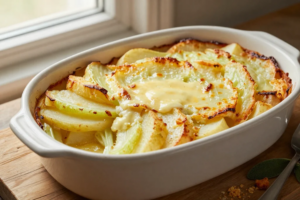
Celery root or celeriac, has been called the “frog prince” of winter vegetables. It does look sort of warty! However, celery root is an excellent lower calorie alternative or addition to potatoes and other starchy vegetables. It is not well known in the US, but in other countries it is the star in the famous French bistro salad, Célerie Rémoulade. Celery root is a brown, knobby shaped root vegetable about the size of a large apple. It is related to celery, parsley, and parsnips, but is grown for the root and not the stalk. However, the green stalk and leaves of celery root are also edible. Celery root can be used raw in salads or as an appetizer with dip. It can also be used as a vegetable or added to soups and stews. Celeriac has a crisp texture with a taste that has been described as a blend of parsley and strongly flavored celery.
Peak Time: November to March
Average Price: $2.99 per pound
Tips for Selection and Storage: Look for medium sized roots, about 4 inches in diameter or the size of an orange. Smaller to medium roots have a smoother texture and are less fibrous than oversized ones. Choose roots that are heavy for their size. Look for roots that are firm all the way around. Avoid any with soft spots, deep spongy areas, or rotting around the root crevices. If the stalks and leaves are still attached, they should be crisp and colorful. For storage, remove the stems and leaves immediately. Wrap the stems and leaves in paper towels and store in the crisper until using, no longer than three to five days. If not using the root immediately, store it unwashed, also wrapped in damp paper towels in the crisper for one to three weeks. If stored in a root cellar, celery root can last for months.
Tips for Preparation: When you are ready to use, either raw or cooked, scrub the celery root with a stiff bristle brush under cold running water. Trim the root a little more, if it is particularly bumpy and fibrous and then use a vegetable peeler or small, sharp knife to peel the brown skin. Immediately sprinkle the root with lemon juice to prevent discoloring. For cooking, cut, chop or shred the root using a knife, food processor, or shredder. If using raw in slaws and salads combine shaved celery root with thinly sliced green apples, fennel, or pomegranate seeds, dressed with a yogurt, buttermilk, or vinaigrette dressing. To make Célerie Rémoulade, toss shredded or match-sticked raw celery root in a classic French dressing made from mayonnaise, Dijon mustard, and a squeeze of lemon juice. Celery root can also be served steamed, roasted, sauteed, or fried and then prepared as you would a potato. Celery root tastes especially good combined with potatoes or other root vegetables in purees, gratins, winter soups, and braises.
Nutritional Highlights: Celery root is an excellent source of dietary fiber and is naturally low in calories and sodium. It is a more nutrient dense root vegetable than others like potatoes or carrots since it contains much more water and fiber. Celery root is rich in vitamins B6, C, and K as well as minerals like potassium, phosphorus, magnesium, and manganese. There are also many active phytonutrients in the root, stems and leaves.
Click here for a recipe for Celery Root and Potato Gratin with Gruyére and Brown Butter